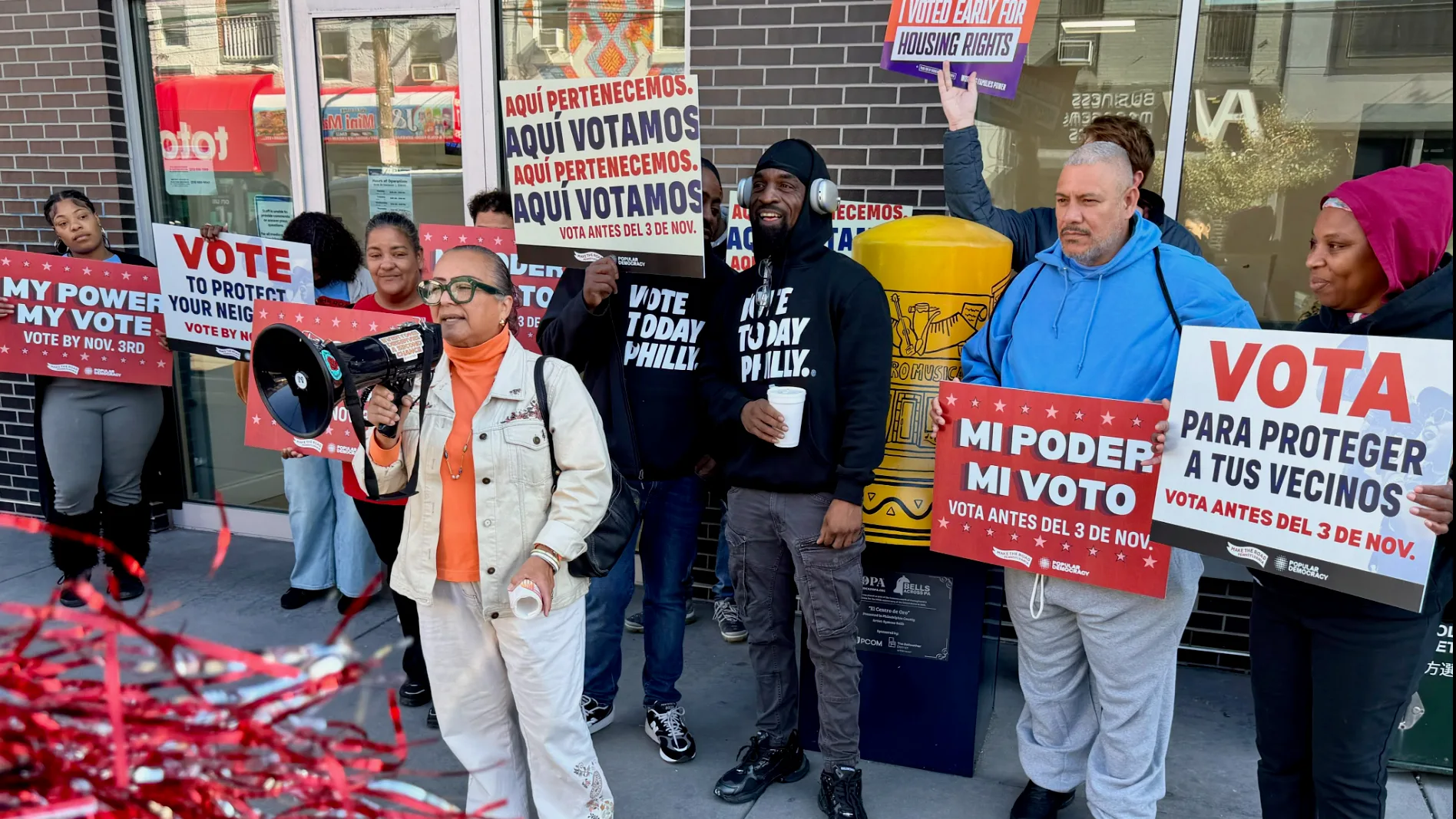
We made history on Tuesday! Turnout in the 2026 midterm was the second-highest in midterm election history, just behind 2018.
A safe, boring election! (But voter suppression is still real.)
Over 123 million people voted in a safe, boring election. We say “safe, boring” because, well, it was! We prepared for ICE at the polls, refusal to count votes, accusations of a stolen election, and the potential for large-scale interference, and … none of that happened! But these “boring” elections didn’t happen by accident.
At the beginning of the year, movement organizations (including many MVF partners), community leaders, and new activists in Minnesota defended their communities from ICE occupation and inspired people to protect democracy. MVF set out to carry this pro-democracy momentum forward into the midterm elections.
We supported partners to recruit and train poll monitors, educate voters, provide voting resources, and make 2026 the biggest midterm early vote in history.
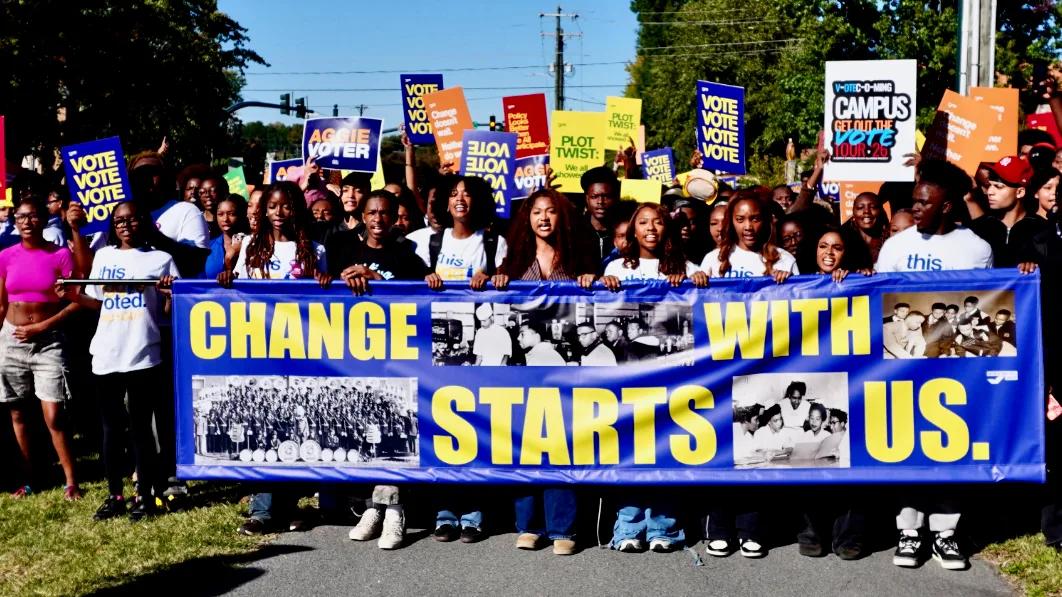
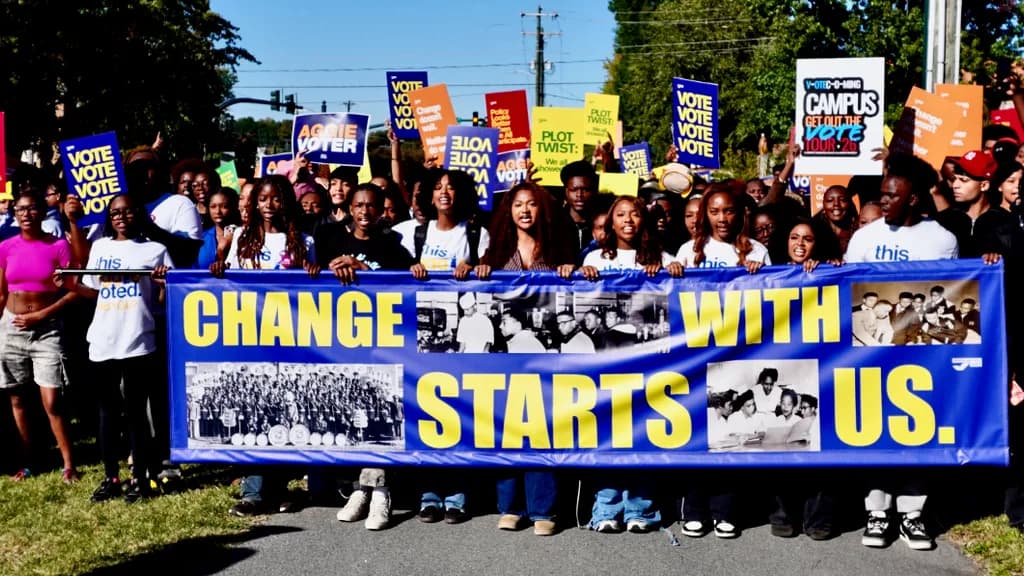
Photo: North Carolina A&T State University students march to the polls with When We All Vote after county officials declined to set up a voting site on campus.
Early voting protected voters
MVF prioritized early, in-person voting by coordinating and funding hundreds of partners. Constant back-and-forth litigation threw into question the reliability of mail-in voting this year, and we wanted to use joyful, in-person early voting events to build a popular, public narrative about the power of civic engagement.
We did it! A record 67+ million people voted early in the 2026 midterm elections. Early voting was, no doubt, a big contributor to the boring, safe election. Early voting gave people more time to fix any issues with their ballot. It provided social pressure that multiplied turnout. And it built serious momentum for our democracy — one that was hard to refute and hard to tamper with.
Here are just two of dozens of examples of early vote campaigns put on by MVF partners:
- Hundreds of North Carolina A&T students walked 40 minutes to an early voting site in Greensboro at a When We All Vote #PartyAtThePolls event, after county officials declined to put a voting site on campus.
- MVF partner We Are Family in South Carolina ran a “Chosen Buddies” program to encourage LGBTQ+ young people to grab their friends and head to the polls. They had 10 youth-led Power Circles across the state and wove voter education into their existing programs. For many of the LGBTQ+ young people in We Are Family’s base, a trusted friend and a ride can make the difference between sitting out and showing up.
Read more about MVF’s investment in making 2026 early vote the biggest in midterm history here.
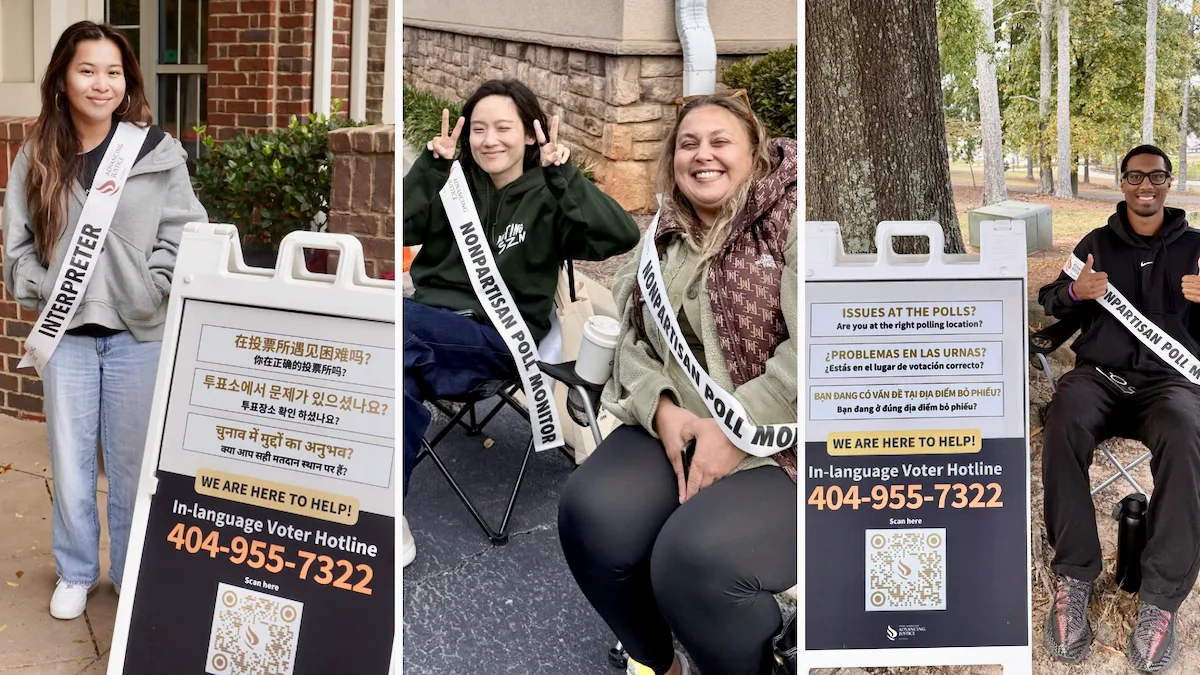
Photo: Asian Americans Advancing Justice-Atlanta poll monitors and interpreters at polling places across Georgia on Election Day.
Language access is voter access
Beyond legal defense efforts, trusted community leaders pulled out all the stops to ensure everyone could vote by providing comprehensive language assistance and in-language voting resources.
About 71,000 voting-age Arizonans speak Navajo, and about 1 in 10 of them aren't fluent in English. MVF partner Rural Arizona Engagement (RAZE) created a free audio guide, Listen to Your Ballot, with 76 short episodes in Navajo, White Mountain Apache, Spanish, and English. Each explains a statewide office or a ballot proposition, including what a “yes” or “no” vote would mean. Crystal Littleben, a Diné woman from Round Rock and a former Miss Navajo Nation, narrated the Navajo edition.
Asian Americans Advancing Justice-Atlanta trained more than 50 election protection volunteers, who supported voters at 15 polling locations across Gwinnett, Fulton, Cobb, and DeKalb counties in 13 languages. In addition to the election protection program, staff and volunteers knocked on 45,000 doors in AAPI and immigrant neighborhoods. That help matters where official language assistance falls short: Gwinnett County, home to more than 138,000 Asian Americans, a third of whom have limited English proficiency, is required to provide voting help only in English and Spanish.
Voter suppression still exists. And it still sucks.
While we didn’t see all-out authoritarian attempts to overturn our elections, far too many voters still faced barriers to casting a ballot in 2026, most notably and unsurprisingly in the South.
North Carolina passed new, last-minute absentee ballot restrictions just as ballots were being sent out to voters. The new policy required voters to seal their absentee ballot in not one, but two envelopes — a change from previous years. If a voter did not seal both envelopes correctly, election officials had to throw it out. So when North Carolina began reporting high rates of ballot rejections, we were not surprised. But MVF partners like Common Cause Education Fund, Democracy NC, and Forward Justice educated voters about the new rule and what they can do, publicized and staffed the voter protection hotline, held a first-day-of-early-voting election protection press conference, and more to make sure North Carolina voters could cast their ballots and have their votes counted.
Thousands of voters in Mississippi cast provisional ballots because of a voter suppression law passed in 2023 that moves voters who skip even one election to an inactive list. That’s why vote counting has gone on far beyond Election Night in Mississippi. MVF partners MS Alliance and IAJE are helping voters cure their ballots by providing resources and information and helping coordinate a statewide, nonpartisan ballot cure operation.
It’s the economy, stupid!
The historic midterm turnout was driven by the issues working people face in their everyday lives. According to the Tufts University Center on Information and Research on Civic Learning and Engagement (CIRCLE), young people were “issue-focused voters who are motivated by a desire to effect change and drive action on their concerns. In the 2026 midterms, the economy was at the top of young people’s priority list, alongside other key issues like health care and the war in Iran.”
Pocketbook issues dominated MVF partners’ efforts to organize communities and mobilize voters. Mobile home residents organizing with MVF partner Maine Labor Climate Council won lot-rent protections in all eight Maine towns, with residents of Wells setting the high-water mark of approval at 79% support.
In Iowa, voting rights advocate Deidre DeJear and State Rep. Rob Johnson held a gas giveaway, "Fueling Hope," to support a "Pre-War Gas Price Day" in the Waterloo and Cedar Falls region on Oct. 18. Volunteers reached out to families struggling with rising prices, offering a tank of gas at the pre-war gas price of $2.75, a needed break from the soaring cost of gas and diesel. MVF partners Vision Leads and Iowa CCI participated, helping register voters and collecting commit-to-vote cards in hand, ready to talk with the thousands of people in line about the cause of rising gas prices.
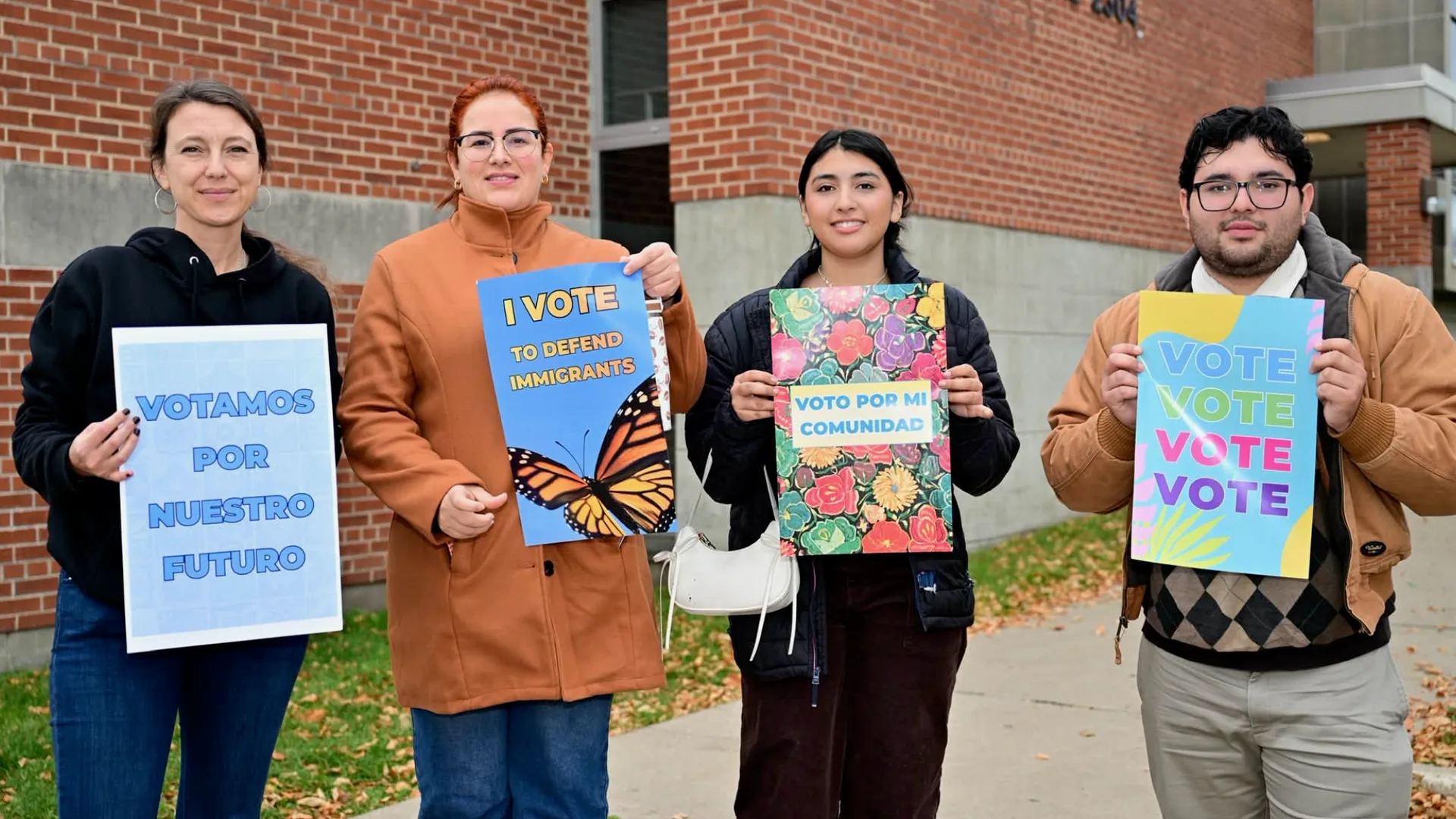
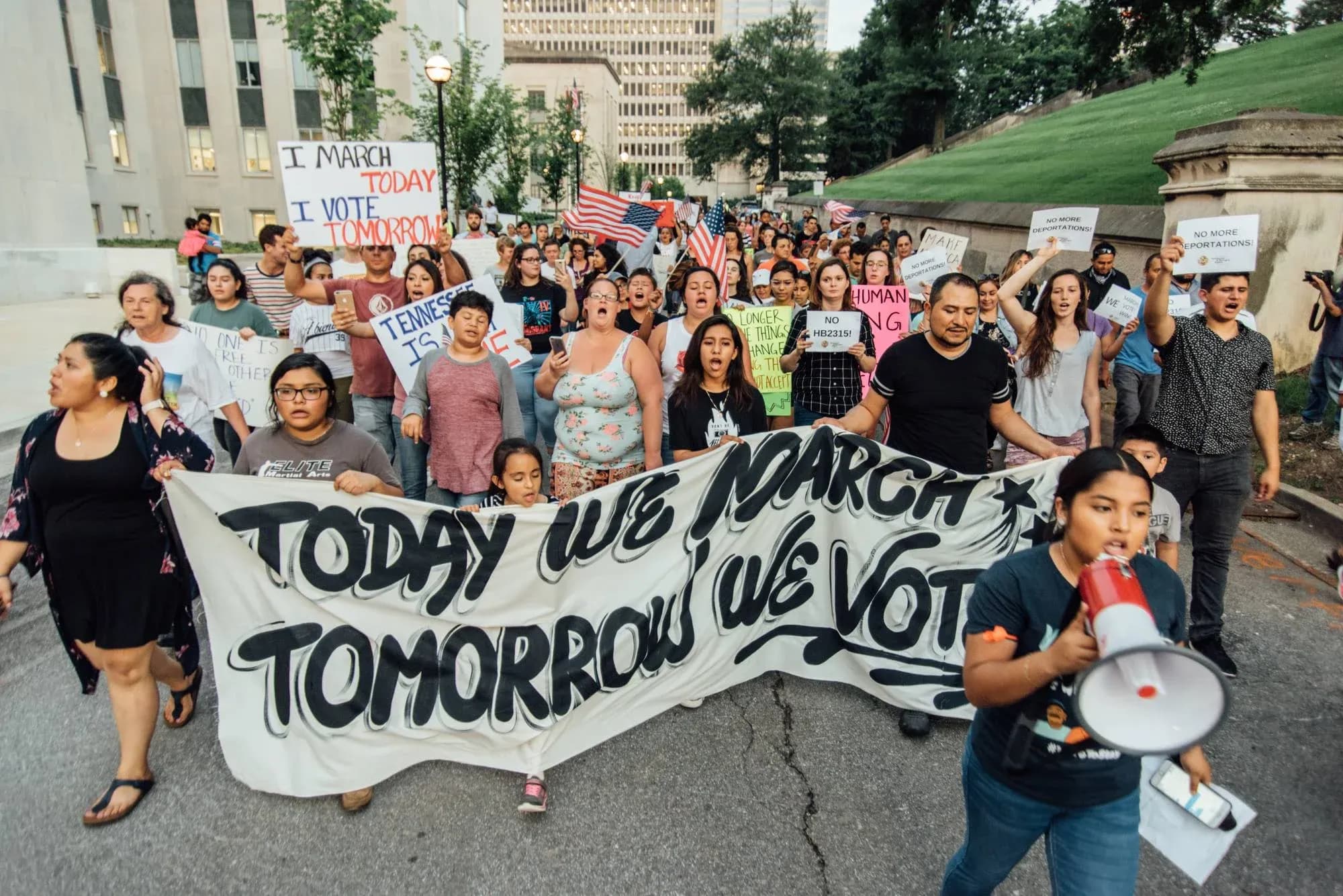
Photo: Voces de la Frontera and Wisconsin voters show why they vote: for our future, to defend immigrants, and for our community.
Writing the next chapter of history starts now
Voters cast ballots in the 2026 midterms expecting government to protect their freedoms and deliver on material improvements in their everyday lives. MVF partners are taking a moment to reflect, debrief, and absorb the lessons from this midterm election. But after much-needed rest, they’re rolling up their sleeves to continue strategizing on how to deliver tangible change, make structural reforms that strengthen democracies, and organize their communities more broadly and deeply in the future, especially as state legislative sessions begin in January 2027.
So much is at stake in the next five years: the 2030 Census and redistricting, the fate of the Electoral College as the national popular vote gains momentum, the end of “forever wars,” the rise of AI, and more. MVF partners are ready to write our next chapter of history through organizing, advocacy, and holding our newly elected leaders accountable to deliver real change to working-class people across the country.
Now is the best time to commit to MVF and our movement partners to ensure that they can continue the midterms momentum for their communities and our democracy in 2027 and for the long haul.