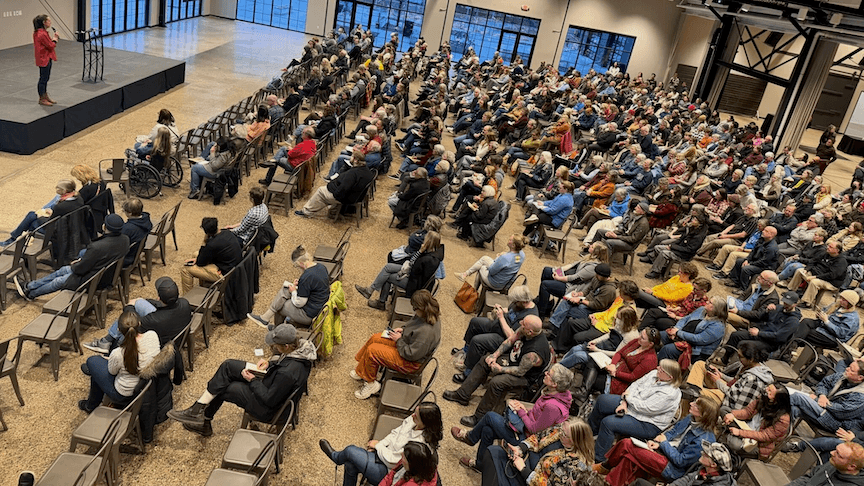
ICE surges and violence marked the beginning of 2026. Fueled by grief and anger, Minnesotans launched a massive civil resistance to ICE’s occupation of Minnesota cities, abuses of immigrant communities, and the Trump administration’s attempts at authoritarian consolidation of power.
On January 23, Minnesota organized a statewide Day of Truth of Freedom: 50,000+ people marched in the streets of Minneapolis, hundreds of local businesses shut down, and organizers protested corporate collusion with ICE — all in -20°F weather.
The next day, ICE agents killed Alex Pretti. Organizers called for peaceful vigils honoring Pretti and Renee Good on nearly every street corner.
These historic acts of civil resistance did not happen overnight; they were powered by over a decade of deep organizing in Minnesota.
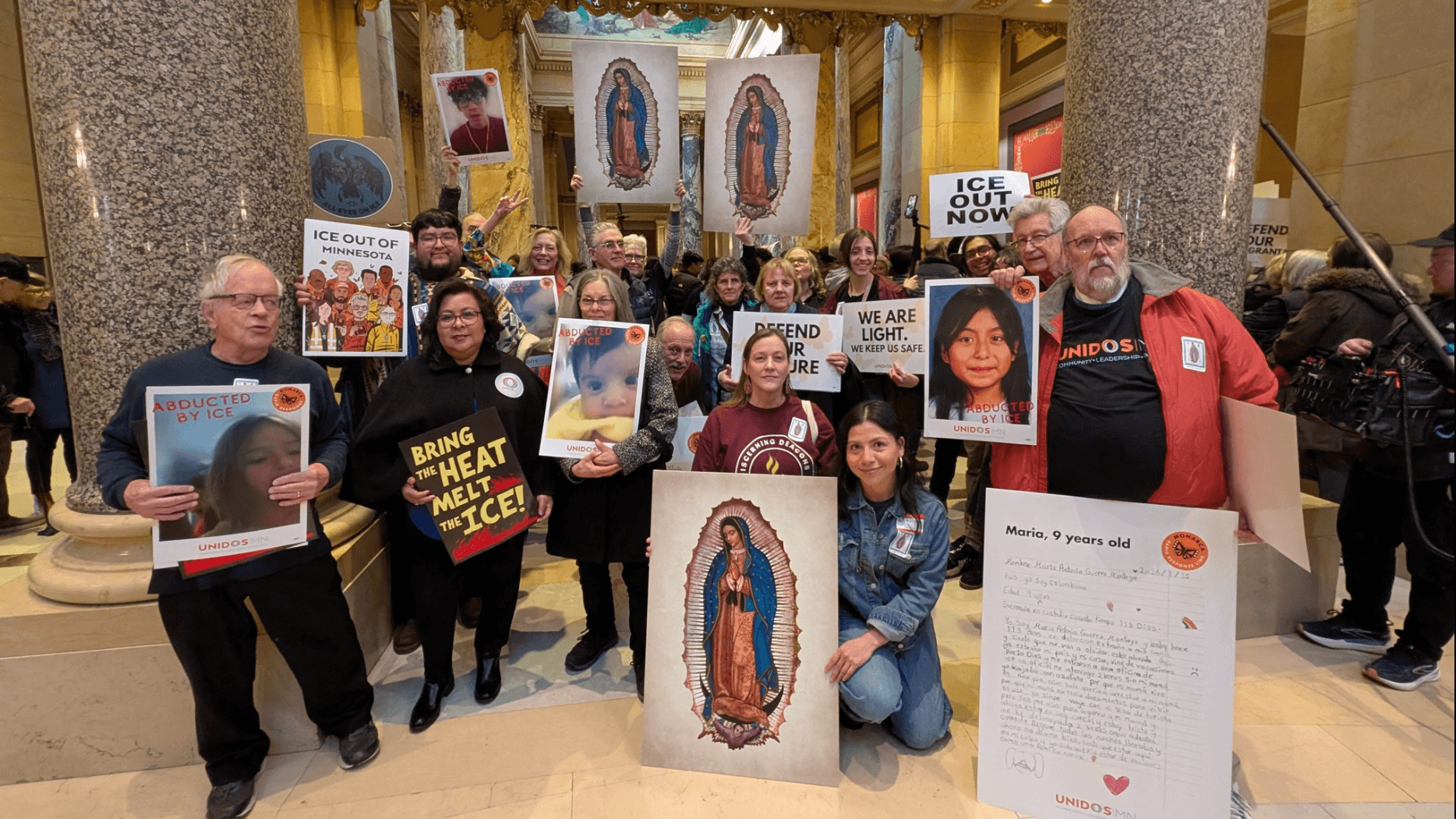
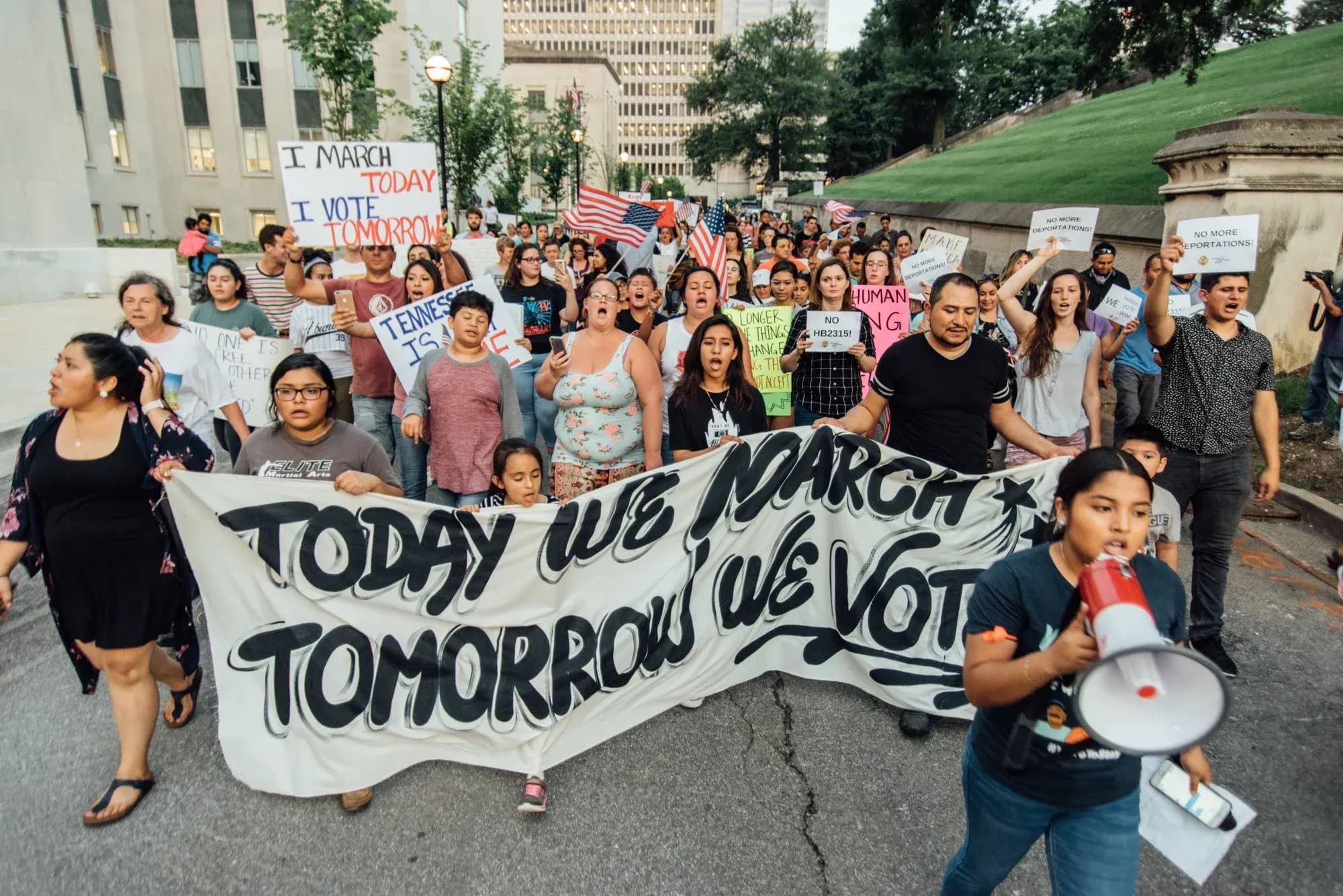
Photo: Unidos MN Education Fund protesting ICE in Minnesota.
Rapid response: Resourcing the resistance in federally occupied cities
In January 2026, at the request of Minnesota organizers, MVF launched a Rapid Response Fund to support resistance and organizing work in federally occupied cities. In a matter of weeks, the Fund moved over $1.2 million to grassroots nonpartisan organizations in Minnesota and Maine where federal occupations surged.
- In mid-January, less than a week after setting up the Fund, MVF began moving $450,000 in emergency grants to Minnesota organizing groups resisting ICE and defending communities. These grants went to organizations like Unidos MN Education Fund and ISAIAH to support recruiting and training neighborhood observers, organizing peaceful protests, and corporate pressure campaign to end cooperation with ICE.
- MVF also deployed $75,000 to Community Organizing Alliance and Presente! in Maine in preparation for Operation Catch of the Day, which resulted in more than 250 arrests, but scaled down quickly because of local civil resistance in Portland and Lewiston and shifts in public opinion after events in Minnesota.
- We amplified the narrative our local partners have set and connected them with opportunities to share directly and engage a larger audience (donors, social media, etc).
- We even ordered 2,500 reflective vests for the Minnesota Day of Truth and Freedom. Organizers spent their valuable time turning out their leaders and networks rather than researching how to buy vests.
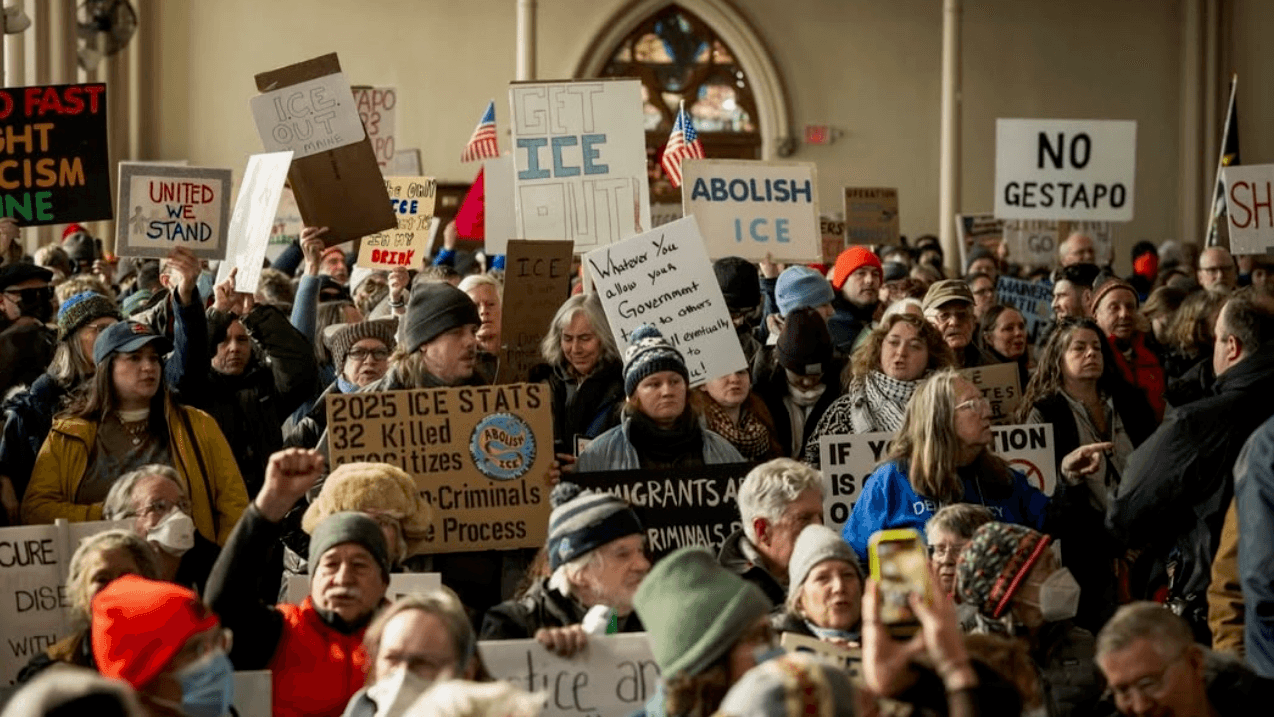
Photo: Community Organizing Alliance - “ICE Out” rally in Lewiston, Maine, 1/24/2026. (Photo Credit: Erin Towns)
Connecting the dots: Learning from the moment
From our rapid response support in Minnesota and Maine, we learned a several key lessons:
- Coordination among grantmakers makes rapid response more effective. MVF has been partnering with Solidaire’s Movement Protection Fund, Four Freedoms Fund, and Democracy Strategy Partners. In coordination with these intermediaries, MVF has been able to fill gaps, fund organizations within 1-3 days, and take a multi-issue approach.
- Familiarity with existing state-level funding channels allows us to move funds quickly. Our state advisors have context for previous crisis responses to identify the best vehicles for moving funds to grassroots organizations to respond in the moment and build for the long haul.
- The line between mutual aid and organizing is blurred during moments of intense escalation, defense, and mobilization. MVF approaches rapid response grantmaking as supporting the overall galvanization and transformation of the organizing and political landscape of a specific geography. These moments remake the culture and structures for civic participation.
The mobilizations in Minnesota and Maine have powerfully shaped the national landscape. Smart, quick organizing, which draws upon long-term relationships, has deterred ICE occupation in communities across the country that the administration named as future targets. Since the civil resistance in Minnesota, hundreds of ICE agents have left the states, and Secretary of Homeland Security Kristi Noem and commander-at-large of the Border Patrol Greg Bovino have been ousted.
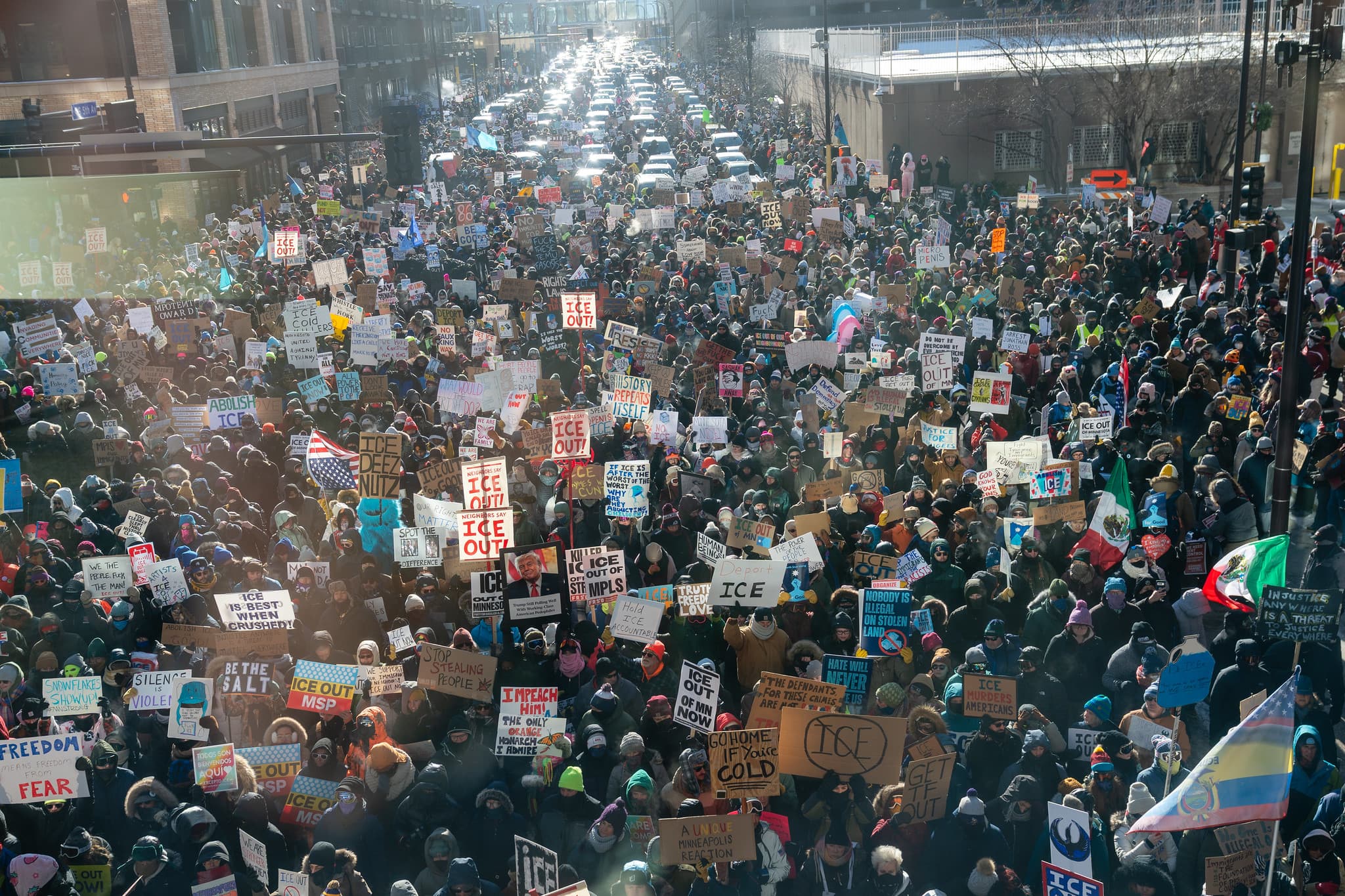
Photo: “ICE Out” march in Minneapolis in January 2026. (Photo credit: Lorie Shaull)
From crisis to long-term organizing
MVF is planning to harness the courageous organizing energy of 2026 — from the 8 million people who attended No Kings 3 rallies in March to the neighborhood ICE watches that have popped up all across the country — into voter engagement and election protection.
In April, Unidos MN Education Fund trained 700 volunteers with MONARCA — their rapid response program to protect immigrant communities — on democracy defense, and they aren’t slowing down. MONARCA’s cross training across movements and continued engagement beyond crisis moments creates a model for other ICE watch programs across the country, many of whom are already MVF partners.
From Minnesota to the midterms and beyond, we see crisis moments as opportunities to infuse organizing with more people-power. When hundreds of people turn out to protest a new ICE detention facility, that’s an opportunity to register voters and educate them about upcoming elections. When thousands of people participate in a May Day march, that’s an opportunity to talk to them about the issues they care about and plug them into organizing campaigns. When thousands of people come out to defend immigrant communities, that’s an opportunity to train them on election protection.
This year, and for years to come, community defense is democracy defense, and democracy defense is community defense. Leveraging moments of resistance to expand and deepen our organizing keeps our communities and democracy safe.